Color mixing
- Primary (RGB, RGY)
- Secondary (CMY, GOV)
- Tertiary & beyond
- Example
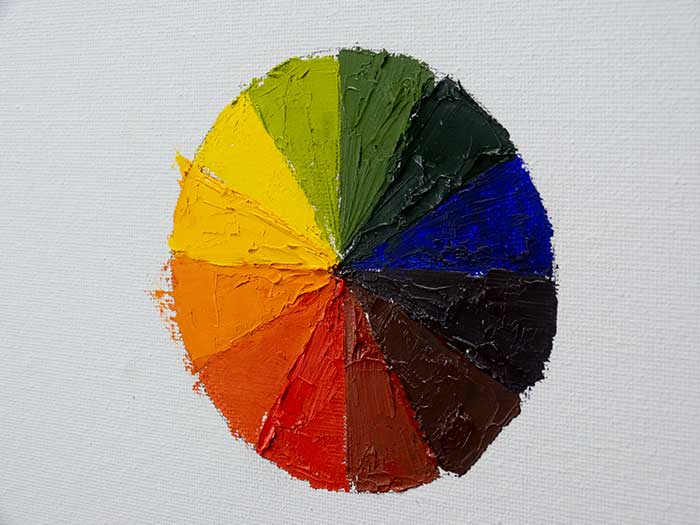
For computers: RGB
For print: CMYK
Color modes
- Monochrome (tints, shades, and tones from a single hue)
- Grey scale (black and white only)
- Web safe RGB (hexadecimal compatible)
Color modification
- Tints (add white to a pure hue)
- Shades (add black to a pure hue)
- Tones (add grey to a pure hue)
Color harmony
- Complementary (colors on opposite sides of color wheel)
- E.g. red/green, yellow/violet, blue/orange, etc.
- Split complementary
- Complementary + a hue to left or right by two values
- Analogous
- Tones next to each other on the color wheel
- Triad
- Draw an equilateral triangle between colors on color wheel
- Tetradic
- Draw a rectangle between colors on color wheel
- Quadrilateral
- Draw a square between colors on color wheel
Color impacts
- Different palettes can invoke different moods, locations, times, etc.
- Different color properties
- Cool
- Warm
- Bright
- Dark
- Saturated
- Desaturated
- Intensity
- Color intensity changes in relation to its surrounding color
- Changes in color can catch an eye
- Color increases brand recognition
- Can affect psychology
- E.g. no appetite response to blue
- Pink is tranquilizing, drains energy
Comments
Post a Comment